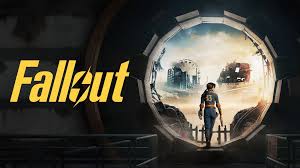
In the twenty odd months between the premieres of Fallout’s freshman and sophomore seasons, I have thought about the television show, or the property as a whole, at least once a day. This relatively quick turnaround is a breath of fresh air in an industry defined by multi-year gaps, a reality mirrored in universe through a small, multi-day time jump.
We begin, after an ominous cold open, by dropping in on Lucy and The Ghoul’s tentative trek across the Mojave, cut short by Cooper’s abduction within the Dino Dee-Lite Motel. Immediately, it is apparent that the Fallout machine is firing on all cylinders, fueled by the same unadulterated passion found in season one. If anything, there’s been an upgrade, and as the opening chord to Marty Robbins “Big Iron” strikes, any and all bated breaths are released – the showrunners have done it again.
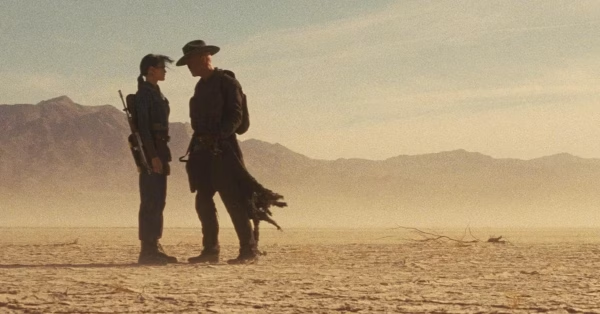
Hot in pursuit of the monstrous corporate shill, Hank McLean, the lonesome road leads our unlikely tag team to the last bastion of industrial society: fabulous New Vegas. With the introduction of New Vegas (the surviving iteration of the infamous gambling hub) also comes the question – where is the city’s ingenious proprietor, Robert Edwin House?
Mr. House, who serves as one of many potential allies/adversaries in the Two-Thousand-and-Ten game, Fallout: New Vegas, is the fan favorite megalomaniacal CEO of RobCo industries, a pre war giant in automated technologies. Though able to preserve his mind and body up until the events opf the game, his status is unknown by the time Lucy and The Ghoul arrive on The Strip. However, through Cooper’s past perspective we are able to witness Robert in his prime, a concept at this time exclusive to the show. Brilliantly portrayed by Justin Theroux, House acts as capable competition to rival Vault Tec… and herald the arrival of a third player in their war of thermonuclear wits.
This world-ending scheme, which similarly sat at the epicenter of season one, is further pulled into focus as the events leading up to the Great War unfold through Cooper’s eyes. And, as dangerous circumstances take him on a parallel journey to pre-war Vegas, it becomes clear that his role in the end of the world was not limited to mere observation.
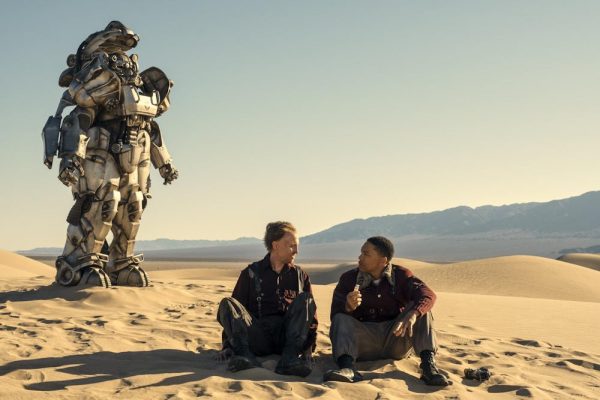
Despite his considerable infrastructure and intellect, House is not the only player vying for control of the Wasteland. Outside of the city limits a war rages between the New California Republic and Caesar’s Legion, an anachronistic army of slavers living in a collective delusion of ancient Rome. But, hidden among the chaos, a new conflict is mounting, a war that reaches far beyond the petty squabbles of society’s scraps. A war that was set in motion over two-hundered years ago.
All the while across the desert, Maximus continues to protect the cold fusion chip and fight for the Brotherhood of Steel. But, when a connection from the Boston Commonwealth threatens peace among the Brotherhood, our disgraced knight similarly sets out on a parallel path into the city.
Fallout season two is entirely more complex than its predecessor. It is no secret that the countless, potentially overwhelming plot threads and fragments of lore can create a sort of Gordian Knot that, if placed into the hands of less competent writers, could prove problematic in ways of comprehension. Fortunately, un-sung heroes Wagner and Robertson-Dworet have expertly untangled said knot, leaving only a riveting narrative braid that entwines the lives of our main characters with the grand movements of a global conspiracy.
Rising to meet the exceptional bar established by the writing staff, our ensemble cast perfectly executes the natural character development set up throughout the first eight episodes in yet another refreshing continuation of season one. While usual suspects Purnell, Moten, and Goggins continue to seamlessly embody their characters, Justin Theroux dominates the screen from the very first word, fully transforming into the Howard Hughes-esque madman.
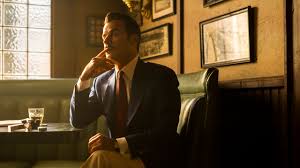
Theroux is faced with a unique challenge: adapting a pre-established, beloved character – a challenge the decided non-gamer may not have even recognized. Despite his lack of familiarity with the source material, or perhaps because of it, it truly feels as if the character has come to life.
House is not the only element stolen from the sixteen year old Mojave; fan favorite monstrosities such as Deathclaws finally make their long awaited “small” screen debut, alongside an important appearance from series narrator Ron Pearlman. All of these moments, homages, and references are perfectly accompanied by the perfect song plucked from Fallout’s famous catalog of retro hits.
A tell-tale aspect of the series’ retrofuturism, few things are more important to the feel of the wasteland than its soundtrack. While all eight episodes are filled to the brim with fitting arrangements, episode seven, titled “The Handoff,” is perfectly carried to an anxious peak by the crescendo of Balada de la trompeta, a standout example of music carrying a scene.
Similar to season one, this outing into the wasteland splits its time between resolving mysteries and teeing up new ones, a delicate dance that can result in an unsatisfied viewer. Fortunately, through independently engaging set pieces, well rounded, tangible characters, and a healthy sprinkling of meaningful fan service, Fallout effortlessly entertains its viewer. It is this incredible entertainment value that allows Fallout to take such time and care to develop its narrative, with its inherent fun ensuring the viewers undivided attention.
Now, as the dust settles after the show’s sixteenth episode, and as production already begins ramping up for a May start date, I excitedly anticipate an early twenty-twenty-seven release date. Amazon has an immense amount of faith in its production team, with renewals and accelerated production becoming the norm for the IP. A refreshing update for fans anxiously awaiting the answers to their numerous questions.
Until then, you should probably just rewatch season’s one and two. I know I will.