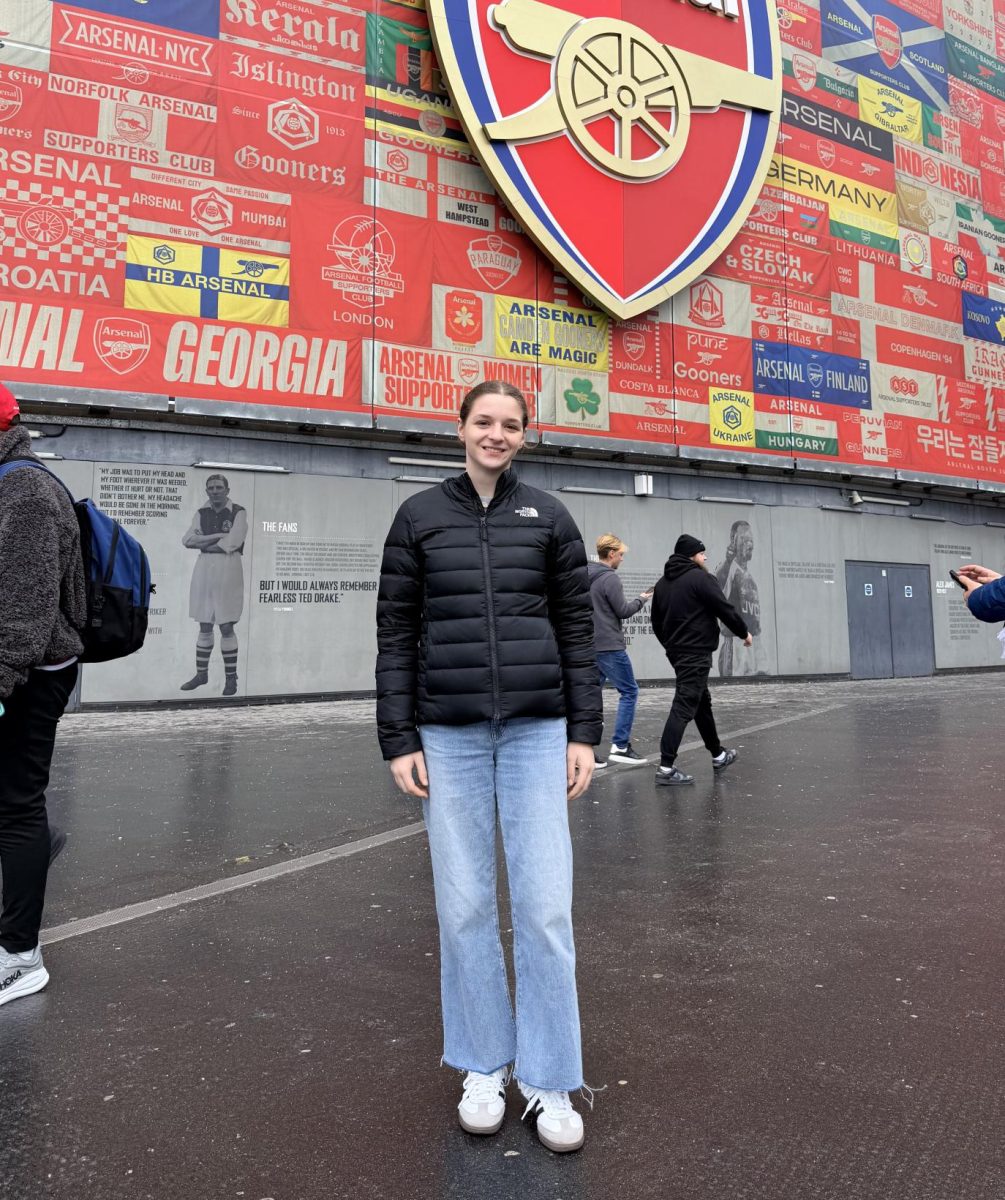
Most people at our school have probably passed her in the hallway without noticing. They may have had a class with her, yet never really took the time to get to know her. Perhaps they even unconsciously overlooked her, simply because of her quiet demeanor. Places like this school are where the loudest voices are usually the ones remembered, making it easy for someone so quiet to silently fade into the background.
This has become a habit. One that blinds us to the experiences and depth carried by those who speak the least. Too often, we forget that every person has a story, regardless of the volume and frequency of their voice. Thus, what many students fail to realize, stemming from their failure to ask, is that Madeleine’s story never began in this small town, but hundreds, then thousands, of miles away.
Although born in New York City, the sophomore, Madeleine O’Shea, moved across the globe to the southern tip of Africa when she was only three years old. She spent most of her life in Johannesburg, South Africa, where she remained until returning to the United States at age eleven. A beginning that can be easily missed by those who do not take the time to listen.
Her father’s career was largely the driving force behind the move, as it often required frequent, long business trips to South Africa before relocation was even on the table. Eventually, tired of his own absence, he came to the belief that it was better to keep his family together than leave his wife alone, raising two children in New York City. Yet for all the impact her father’s job had on shaping her childhood, Madeleine admits the logistics of his actual work have never come up for discussion. To this day, she honestly still has no idea what he does that made him need to work in South Africa for periods of time.
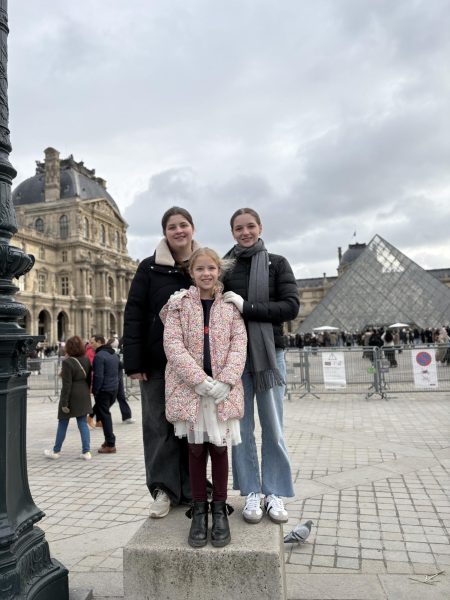
As the oldest of three sisters, Madeleine has the clearest memories of her time spent in Africa. She recalls that the decision to return to the United States was ultimately due to COVID-19 spreading and causing concern, leading to increased heavy restrictions on the public in Africa. “My parents just felt like the right time to return,” she hypothesized, as her family often tended to avoid the skeptical quality of healthcare offered in South Africa. She states that when they learned of their parents’ decision, she and her middle sister, Maeve, who was 9 years old at the time, were “upset to leave but excited about the prospect of moving to a new country.”
Growing up in South Africa, Madeleine was able to experience a culture she describes as exceptionally welcoming: “People are just more open to strangers, and everything is just so joyous,” she said, contrasting it with the vast association of “stranger danger” in the US that often shapes how people interact with outsiders from their own inner circles. She felt that US citizens were often colder and more standoffish compared to the warmth of the people she was accustomed to back home.
Yet the general amiability in the culture’s atmosphere coexisted with a very different reality. Safety was never taken for granted. In a country with a staggeringly high murder rate, homes were surrounded by towering twenty-foot-tall electric fencing, guarded gates, and patrol officers roaming the streets 24/7 in every neighborhood. The closed-off, tightly guarded landscape of her city, juxtaposed with the open-faced lawns common in the United States, was just one of the many things she remembers in her first days, being in absolute shock at concepts Americans find normal: “You can just walk into your neighbor’s yard if you want to, I thought that was just crazy and weird.”

Along with the adjustments to living in an entirely new country and culture, Madeleine had to shut down many assumptions and misconceptions about her old home. She recalls being asked by one of her teachers in eighth grade whether, when she returned to visit South Africa on breaks, she had to bring her own water.
Questions like these are very abundant to naive people who end up learning about the origins of her early life. They reflect the narrow, stereotypical view that many people hold of the continent as being underdeveloped and lacking in technology and education. She says she is often asked whether they had cars or lived in a mud house. “You have to go there to see for yourself,” she says, emphasizing that in reality, it’s far more modern and complex than the assumptions people make from afar.
However, school was one of the biggest adjustments of all. Although Madeleine had visited the U.S. before, her only idea of American schools came from “the movies”. Even the concept of going to school with boys, or of a big yellow bus taking children to school from their houses, was mind-boggling to her.
In South Africa, her education placed strong emphasis not only on academics but also on awareness and community. Although the schools were not secular, and students were mandated to attend chapel every Thursday, they were taught to respect different religions and perspectives. They would have days when guest speakers would come in to teach them about their customs, promoting acceptance of everyone. They also had special days like Nelson Mandela Day and Footloose Friday, during which everyone in the school would make sleeping bags and shoes for people experiencing homelessness.
On top of that, students studied multiple languages from kindergarten, which they called “grade nought”, including Afrikaans and Zulu, so that they can fit in and communicate with a larger portion of the melting pot of cultures. They later, typically in seventh grade, picked one of these languages to specialize in, but by then they were already conversant in both.
The school’s structure was different as well. In South Africa, there is no such thing as public schools; there are only private ones. By the 3rd grade, the private schools would be divided by gender. There were also no cafeterias, and students were always expected to eat outside, with all grades, K-12 (Grade Nought-Matric), at the same time. Classes were small; she even noted that her class was made up of 60 kids and filled three classrooms in total. Uniforms were required, and teachers rotated classrooms rather than students. The school also followed the same closed, fortified layout as the city itself, as it was surrounded by tall walls topped with barbed wire. For Madeleine, she enjoyed this type of environment more than Victor, as it fostered a sense of connection. “I like knowing everybody,” she said.
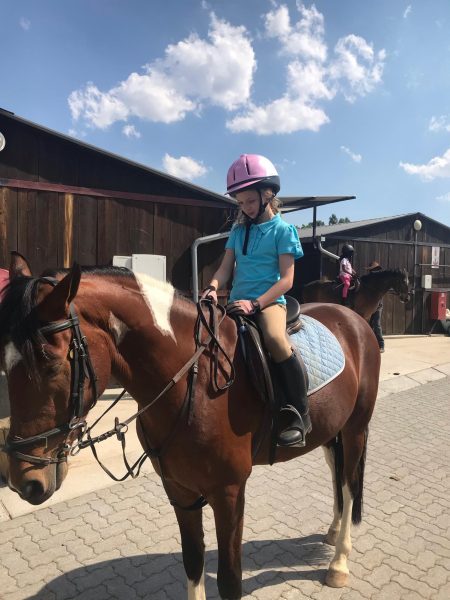
Outside the classroom, sports were a major part of a student’s life and highly valued in their society. Athletic participation was not optional. Students were required to play at least two sports, while also being required to practice ballet until fifth grade. Madeleine competed in various sports, including netball, field hockey, swimming, track, and was also on the school’s equestrian team.
Some sports definitely stood out more than others in the distinctive ways they are played compared to their US versions. For example, if you were running track, it was not the red oval track that has become a staple of the sport, but a long dirt-and-grass pathway where runners were forced to run barefoot, as coaches believed shoes slowed them down. Schools were also divided into houses of random selection: Timlin – blue, Kruger – red, and Baker – yellow. With these teams, they would have “house cups”, which were competitions in running and swimming that extended across all grade levels. “They foster a love for sports and team camaraderie like no school I’ve seen in the US,” she stated as she praised the athletic system of South Africa.
Looking back, Madeleine sees value in both systems. She believes the U.S. offers more opportunities overall, but prefers the aspects of South African schooling, especially the sense of community and connection. Today, Madeleine continues to balance her studies with athletics, competing on the indoor/outdoor track teams and contributing hundreds of volunteer hours to various causes, carrying forward the lessons of service and teamwork she learned in her earlier years abroad.
Though Madeleine may not speak often or stand out in a crowded room, her story shows that quietness does not equal emptiness. It’s normally the loudest in the room that has the least to say and the most to prove. So taking the time to listen to the hushed and soft-spoken truly can reveal remarkable experiences, showing that sometimes the most interesting voices are the ones we almost fail to hear.