It’s not the easiest to try and make the decision of a class with a workload on the easier side, and at the same time won’t be a constant dump of difficult work. So, when that fateful day comes, and you’re handed the sheet full of classes to take in your next year of high school, is that actually all the classes that you’re able to take? The process as a whole of trying to get an answer to that question was a tricky back and forth process between myself and different staff members. The school has an online list of all the classes that students at Victor could possibly take. However, comparing classes that were offered in years past, that’s just can’t be further from the truth, so there must be a “master list” of all the classes that Victor is able to offer, right?
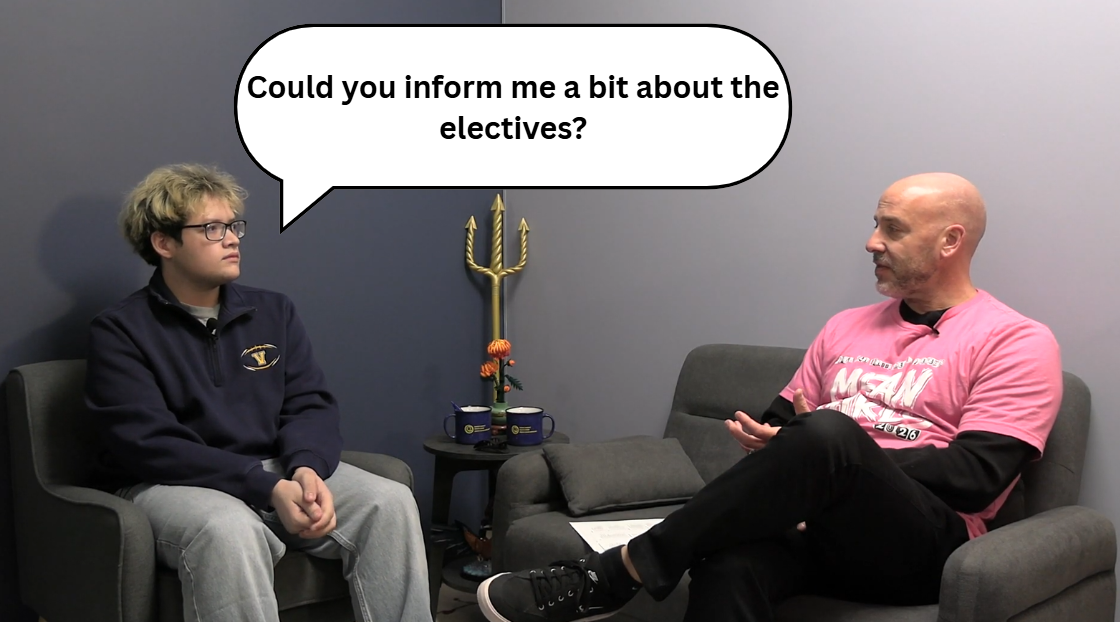
The first four emails sent simply did not lead to any progress in the search for this supposed “master list.” It was almost like a game of ping pong: I was sent back and forth between different faculty members, who would recommend that I email the person who recommended me to email them. But on the fifth email, I finally got an answer from Mr. Siesto, so in order to try and get an answer in person, I sat down with him to try to grasp what’s happening with the so-called “dead” electives.
Let me preface this by saying that Victor does offer a wide variety of electives, from the AP history classes, a creative writing class, and intro to coaching – the most recently added – there’s something that can appeal to the entire student body. When compared to similar schools in our area – let’s take Brighton, for example – both schools offer very similar courses, but Victor students have the opportunity to take more classes in business, technology, and anything related to the music department. When I sat down with Mr. Siesto to ask if he had thought about how electives have changed over the years, he stated, “We try to offer things that really are relevant to what students need, not only in 2026, but what students are going to need to be globally relevant when they graduate from Victor”.
But why still offer electives that won’t be relevant to the world in the future? You may be asking yourself, if these electives are still offered and “clogging” up the list, why not just can them? Well, the thing is, electives never truly die; they’re simply based on students’ interest in the course, “I think what happens is sometimes students won’t sign up for a course that won’t run for a couple of years, and some students might not even know that it’s offered. So when we show them the course election sheet and do the offerings they can see, ‘Oh I didn’t realize there was an intro to piano course’ for example”. From the multitude of business classes to the plentiful amount of technology classes we offer, there are just so many classes that the school offers that simply don’t get the attention that they could.
If you didn’t know, the school is introducing a new class starting next year, Python. Python is a class that’s based on the Python coding language, which has gained popularity within the technology field in the past few years. The process itself of figuring out if there was any interest in the class was not all too overcomplicated, “Mr. Wuest did some soft data analysis of his students of some course options that could potentially generate interest and be really worthwhile for students…if there seems to be a positive reception to it, then we’ll look into course development”. At this point we can assume that the technology courses that we offer are widely popular among students, “[Siesto’s quote on the tech and business side of classes/where he talks about the new wing addition]”, if it’s relatively easy to add courses like this, why don’t we have more courses that appeal to a more variety of students.
All classes that are currently run by the school are driven by student interest, “…For our elective list we pretty much run the full gambit of eligible courses that students can sign up for. When they [the students] sign up for them during the scheduling process we’ll take a look at those electives and if there’s enough students to have a class of 15 or more, then we’ll run that elective even if it’s something that hasn’t run in a few years”. This clearly isn’t a problem that has to do with a lack of student or teacher interest, but rather a problem with how so many of these classes are promoted from word of mouth to the actual in class presentations. From the multitude of business classes we offer to the plentiful amount of technology classes, there are so many classes that the school offers that simply just don’t get the attention that they could.
So no, there is no “master list” of all the classes we have to offer, at least in the way it appeared to be at first. All the classes students can take are on the table when it comes time to make that decision, and we’re very lucky in that matter.