
What exactly is a third space? Why are they disappearing, and why is a lack of them a problem? How does this affect me?
Well some of those are easier to answer than others. Let’s start with the easiest one.
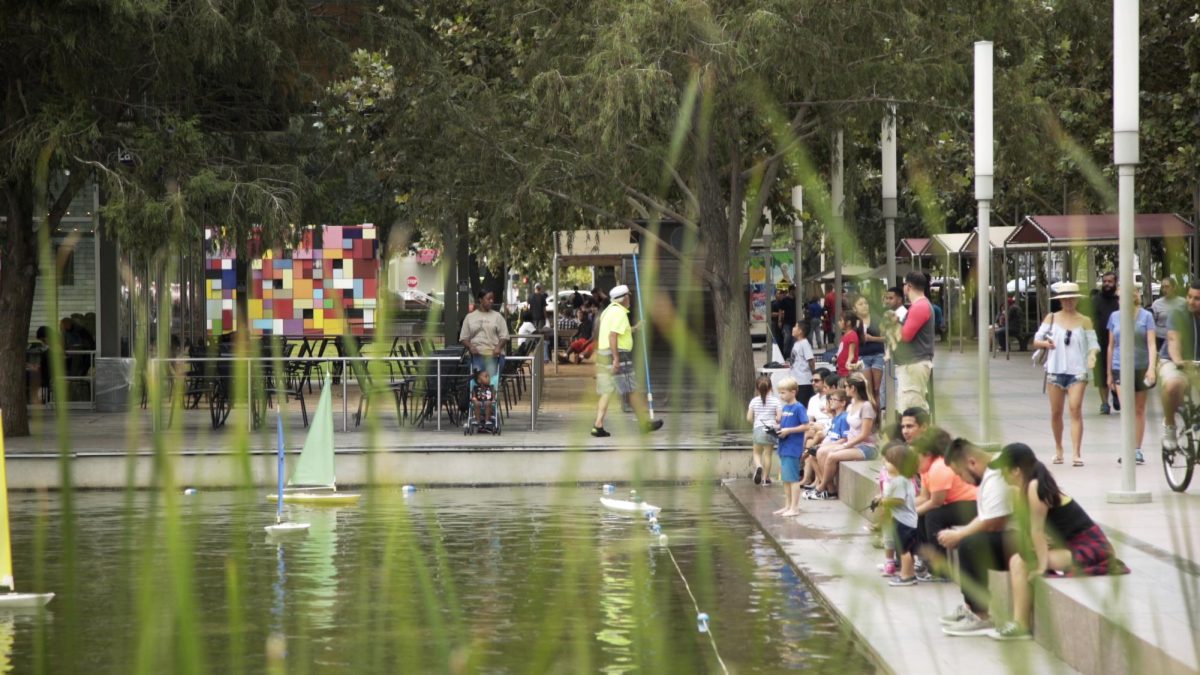
The term third space, first coined by sociologist Ray Oldenberg in his novel The Great Good Place, refers to a place other than home or work (or school for students), where people can go to socialize and enjoy themselves.
The goal of a third space is to build community, and foster a friendly environment between people of all different backgrounds. They help to improve mental health, social skills, and have several academic benefits.
And yet, I’ve been noticing that there seems to be a lack of third spaces lately. And that’s where we come to our second question: Why are third spaces disappearing?
Now the obvious and surface level answer is technology. With the emergence of online spaces for people to go, the desire for physical third spaces seems to have been forgotten in the past. We almost have our own personal third spaces stored right in our pockets. Our cell phones answer our desire for socialization that we typically look for in third spaces.
In addition to that, the reliance of technology seems to have increased greatly the past few years in a post COVID world. When the world was shut down, we turned to the internet as a means of communication, as it was the only way we could safely interact with others at the time.
Online spaces aren’t necessarily a bad thing simply because they do not have the benefits associated with in person third spaces. Online spaces can offer a safe space for everybody, and allow people to connect with others who are similar to them. They are also a cheap alternative to potentially expensive third areas, which brings us to our next point.
Money. Something always on everyone’s mind, especially in this day and age of inflation. Third spaces can be something free, like a park or a library, but in our late stage capitalist society, free third spaces are often few and far between.
To use Victor for an example, the main place to hang out is Eastview Mall. Malls are a great place to hang out for low stress fun with friends, but there is also a constant pressure to spend money.
On top of that, there is the issue of loitering. While illegal for valid safety concerns, loitering is also generally frowned upon at a business, such as a mall or something similar, without purchasing something.
The “entry ticket” to a third space can deter many that may have otherwise been interested. Whether it be a literal entry ticket to do an activity, an age restriction, or a purchase, any amount of money required to do something will deter some people.
An article I looked into on third spaces compared McDonald’s to a modern American equivalent of a British pub. Pubs are a community space where people could go to eat food and enjoy the presence of others, a phenomenon that is becoming more and more rare in the states.
But why is that? There may be less desire for third spaces now than 30 years ago, but the demand is still here. There are countless videos on social media outraged about the lack of third spaces, with lots of support from viewers. So, if people have a desire for spaces like this, why are they disappearing?
A convincing theory I’ve seen points to classism. Third spaces were especially popular when people of every social class, lower, middle, and upper class, could interact in the same city. The best part of third spaces used to be the ability to meet people unlike yourself and learn new things about others.
Cities nowadays do not consist of the same diversity we once knew. Increasing prices have pushed the middle class out into suburbs, where a car is needed to get anywhere, and the desire to go out of your way to visit a third place has lapsed.
This is clearly seen in Victor, where third spaces are not frequented. In our mass suburban landscape third spaces are not common, and the desire to visit them is even less common.
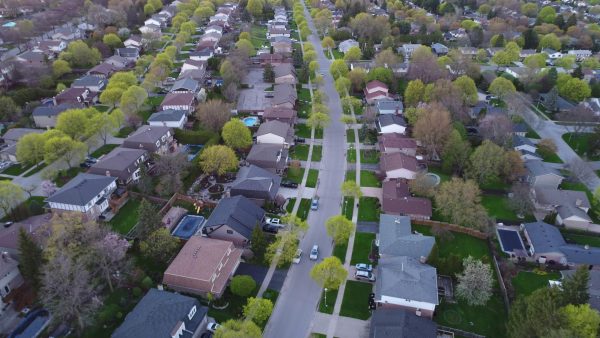
With the structure of suburban society accessing third spaces is difficult. Miles of neighborhood separated by the occasional mile of businesses separate consumers from both business and third spaces, requiring more effort to get out and visit either.
Since the middle class is the main group of people that occupy the suburbs, there also isn’t much time for visiting third spaces. Going out of your way after work or school, going away from home and spending money that there may not be a l
ot of in the first place, and spending what little free time you may have at a third space simply isn’t appealing to most middle class Americans. And so, third spaces in suburbs have effectively ceased.
Without the middle class to occupy third spaces in cities they’ve begun to disappear. The lower class left in cities cannot afford the time or money to visit third spaces. The upper class still in cities have their own elite socializing circle and do not desire third spaces like they once did. There are hardly any in urban, suburban, or rural areas. There simply aren’t enough people nearby that want them.
The main classes of people left in cities are the lower and upper classes. The upper class has been able to stay despite inflation and rising prices, but they have less of a desire for communal third spaces as they can simply afford any socialization that they may desire. The lower class cannot afford the few available third spaces options left in cities.
Okay, third spaces are gone due to a multitude of reasons, but why is this important?
Third spaces aren’t just frivolous entertainment, they’re linked to many benefits, like the ones I touched on earlier in the article.
There have even been studies and research to support the claim that students who participate in third spaces generally do better academically than their peers who do not.
It can also be seen that well structured programs at third places have the greatest impact on improving mental health, social skills, and academics. That being said, even spaces that are not structured are beneficial to growth and maintenance of skills that are not prioritized elsewhere.
Connecting with members of a community, of your community, is always going to be beneficial. Building empathy by interacting with others around you will ultimately make the world a better, kinder place.
Again, I hear you asking, “Okay, so what? If they’re all gone, what am I supposed to do?” Not to get all technical, but I never said all of them were gone, just that there seems to be fewer and fewer. In my opinion, the best way to keep something from disappearing is showing that you appreciate it.
 Victor, for the most part does not seem to utilize their third spaces. We have a library, that is largely unused. There are several parks that are often frequented. Even Eastview seems to be getting old for people.
But this ignores the vital necessity of third spaces. They are needed for personal benefit and for the benefit of society. If we continue to not use them at this rate, then they will all disappear.
Get out in the community, go to a park or a library or a cafe! Have fun with your friends, with strangers, and with everyone in between. Frequent third spaces, because maybe if we can convince people how important they are, they won’t disappear completely.




Tobie Iwankow • May 5, 2026 at 1:11 pm
Class consciousness for the win!!! Phenomenal article, I really never thought about the connection between different societal classes and the disappearance of Third Spaces.