
Who is Mrs. Judge?
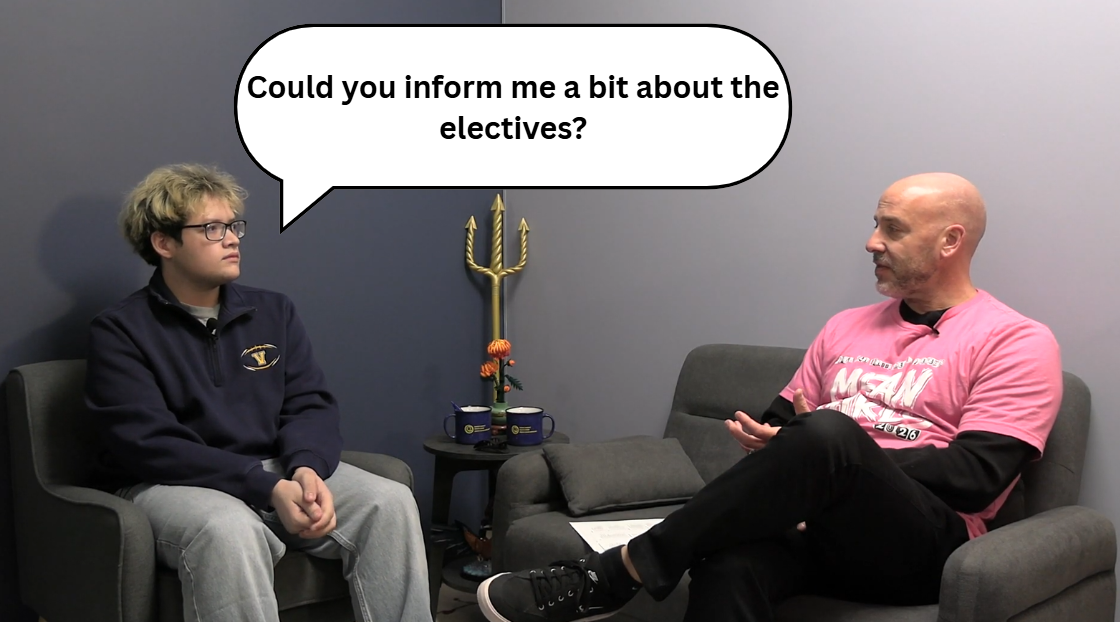
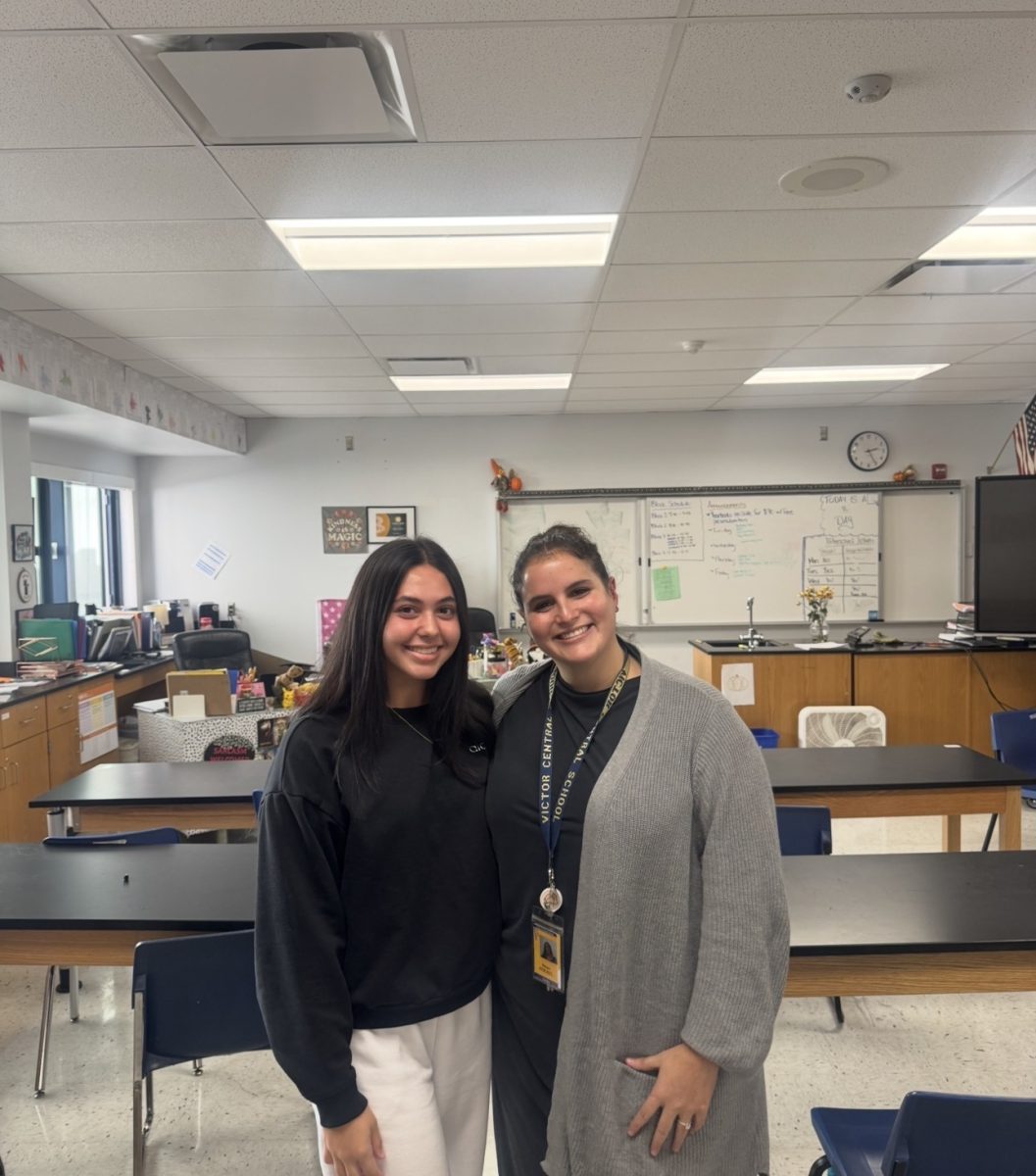
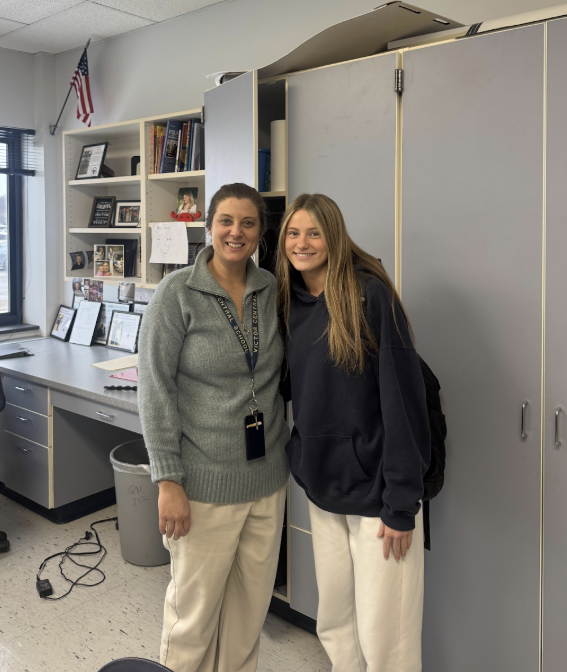
Our beloved strings teacher, Mrs. Judge, let me interview her not just about playing and teaching music, but about a lot of different things related to music – and honestly, just life, too. For those of you who don’t know her, Mrs. Judge is one of those people that you can talk about anything with, and she shares so many interesting anecdotes about her life that makes her easy to connect with. Every orchestra class is so much fun, and it’s all because of her and the energy she brings and radiates to us.
Just for some general knowledge about her, Mrs. Judge is a mother of three boys, all of whom have moved out for college or their careers. This is her seventh year teaching at Victor, and she’s been playing violin since she was 4 years old. She attended Clarence High School, SUNY Fredonia for her undergraduate, and she got her Master’s Degree at Ithaca College.
Mrs. Judge really loves Rochester and the area because of how much people can do here, and even though it’s cold, it’s worth it because of the people and the lack of heavy traffic. She loves to bake, and her orchestra kids always get brownies after dress rehearsals because of it (they’re really good).
Music is a huge part of Mrs. Judge’s life, and it always has been. However, if she couldn’t teach music, she would be an English teacher – she loves reading, writing, and poetry. She told me that she has always wanted to teach music, though, since her dad is a music teacher – she thought it was “the greatest job of all time.”
Mrs. Judge can play all of the string instruments – violin, viola, cello, and bass (though not as much bass). Recently, she’s been liking the middle tone of the viola, but she really loves her violin because it’s vintage – it was built in 1723! For anyone who doesn’t know, older string instruments usually have amazing sound quality, and a 300 year old violin is really impressive.
So now that you have Mrs. Judge’s background, here are the topics I thought were really interesting. I didn’t want to just ask her what her favorite instrument is, or why she chose teaching. Anyone can answer that. I wanted to ask her about music and how it connects people, how music can describe us, and how music is a part of us. I wanted to learn how music was not just in her life, but a part of her life.
Learning Music
I first asked her how she thinks music connects people. She said that it’s not a usual sort of connection, it’s built from shared vulnerability. “You can’t really predict what’s gonna happen, you have to just trust the people around you. And I think all of those elements lead to a sense of togetherness,” she said.
She says this has happened at Victor, too, with our own music program, our own music community, that has a lot of pride, and I had to agree with her, being a part of the community we’ve built.
Of all the different types of instruments – strings, woodwinds, brass, and percussion – Mrs. Judge said that she really enjoyed learning percussion. To be a music teacher, you have to learn the basics of all of them – trombone was a struggle – and she found that she really enjoyed the marimba (it’s kind of like a giant xylophone), and she loves the sound of timpani drums.
In terms of how to learn music, she thinks that piano is the best foundation for learning to play music – despite her inexperience. A lot of people either start learning on piano or guitar, both of which have ways to learn the theory and structure of music woven into them. She wishes that she could play the piano better because it’s such an important instrument, but she says the piano is dying out. “It seems like when kids were doing music 20 years ago… everyone had a piano in their house. And that’s just not the way it is anymore.”
Another really great music foundation is the Suzuki method of learning music. It’s a method used in the Victor strings program that has you listen to songs without playing them, so you get it in your head before you have to play it. It’s how we learn language, copying what we hear our parents say, and it’s an amazing way to teach music. It even works on people trying to learn music who are older, not a little kid or even a teen, because it has that audial foundation. “I think one of the secrets of the success of our program is that all of these kids that are starting in the Suzuki style are learning to play with a beautiful sound from the beginning.”
Contrary to my original belief, Mrs. Judge thinks that learning the cello is the best foundation for learning specifically string instruments. It’s in a natural position, almost hugging the instrument, instead of contorting our necks around for violins and violas. And it’s smaller than a bass, which is harder to play since the strings are so heavy and the instrument is gigantic.
Now, everyone has got these hypothetical situations that they think about – what if Mrs. Judge didn’t teach orchestra? I asked if she’d prefer to teach band or choir, and she didn’t hesitate to tell me choir. She mentioned that she has taught choir before, when she taught in Vermont as a general music teacher. She even started a little weekly competition between some little kids – which class could sing the best to win the sparkly banner for a week? She said it brought a lot of musical spirit to the little kids when they had none before. “I didn’t worry about making sure that we were singing in three parts or singing in Latin. I just wanted the kids to sing and have fun.”
Fun With Music
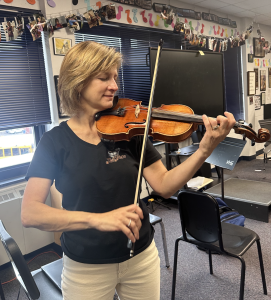 Every musician has heard the phrase, “Oh, you play music? Play me something!” I’ve gotten it, my friends have gotten it – heck, I’ve asked my friends that question – and I knew that Mrs. Judge has gotten it. I was interested to know what piece she plays when people ask. Does she have a go-to piece she plays, or does she play something different each time?
She told me that she likes to play A Shogun Farewell. It was originally written at a camp in the Catskills, and then it was heard by the famous documentary director Ken Burns. He ended up putting it into a documentary, and so now a lot of people, especially adults, know the song and have a connection to it.
She even plays it every summer in a chapel on Lake George because it brought back memories to a woman who used to figure skate to it. It creates a connection just through playing a piece of music, because everyone understands music. They may not play it, they may not be able to talk about the technicalities of it, but they can absolutely hear and feel music.
Just for fun, I wanted to know what Mrs. Judge thought the string instrument personalities were, and which one she fit best. To summarize the personalities, violins are like your A-type people – ambitious and competitive, a bit overzealous at times. Violas are warm and in the background, kind of quirky. Cellos are a little intense, and basses are just the definition of nonchalant.
She thinks she’s a viola now, but she started out as a violin. I have to say, in the relatively brief time I’ve known her, I think she’s definitely a viola. Warm and kind, quirky – in a good way – and kind of a jack-of-all-trades; violas can play a wide variety of music in a number of different ways, and Mrs. Judge plays all of the string instruments.
A lot of people have a dream house they want to buy. So, I asked if Mrs. Judge had a dream instrument to buy. She said she was happy with her 300 year old violin – makes sense – and her viola, which was a gift for getting a job at Victor from her parents and husband. She said she had always been saying she wanted to buy a better viola but never got around to it, and so her family bought her one for her achievement.
I think this was the toughest question for Mrs. Judge: Does she prefer to teach the little kids or the high schoolers? “I think if I had to teach little kids full time, I would probably have to go to bed at seven o’clock every night. They take so much energy, but it’s fun… and they’re so good about following the leader and doing what I ask, and they’re so excited about any little thing.”
I started to agree with her – I’ve had some experience with some absolutely adorable little kids – but she also mentioned that she really loves teaching us older kids, making amazing music with us. And if she had to choose, she would ultimately pick the high schoolers for that reason (that made me pretty happy). She’s glad she doesn’t have to choose, though, and gets the chance to teach both age groups.
Inspiring Insight
One thing I really admire about Mrs. Judge is her attitude towards life. Her motto is “No regrets” and so she takes advantage of everything she can. I asked if she had any regrets about skipping a concert, and she said she had none because she puts herself out there, does everything that she can do, so she lives a life with no regrets.
Her favorite composer is Brahms; if she could listen to a concert of just his music, that would be the best concert for her. “But there’s nothing like playing it. It’s almost as if you’re sitting on the beach, watching the waves, and it’s so wonderful and mesmerizing. But if you’re in the waves, there’s nothing like that.”
However, she said she was once in the orchestra for a piano concerto, and the soloist forgot her part and restarted the whole piece. Usually this is an “Uh-oh” moment in music, but she said it was the most beautiful and emotional music she had heard in years because the soloist was so emotionally invested after messing up. And I think that’s really moving to think about, that she made a mistake but tried again and made it so much better, and I can only imagine how powerful it must have been to listen to.
After this conversation with Mrs. Judge, I felt like I really knew her and understood her a lot more than before. She’s always been easy to talk to, and I love hearing her stories. The music department teachers are like the underdog teachers of the school – the best, but only a small percentage of the students really get to know them since so many people aren’t involved in the music program.
If you haven’t met Mrs. Judge yet, she’s one of those people that if you have even just one conversation with her, you already love her – I remember I was scared to have my first lesson with her, but she was so welcoming and open to me joining the strings program instead of judgmental. She is just such a fun and positive person with an amazing worldview and perspective about life and music, and such fun little stories to share. Orchestra definitely wouldn’t be half as fun or energetic without her.