
The movie Alien was revolutionary in many ways. A new kind of science fiction horror, Alien ushered in a new era of films, in addition to eight thrilling sequels. Recently, the newest installment in the Alien universe released onto HBO Max on August 12, generating a lot of buzz online—this time, as a miniseries instead of a movie.
Alien: Earth, in a way, was also revolutionary. It made some very bold choices, deviating from modern science fiction films as well as the popular miniseries formula. Despite this, I believe that Alien: Earth fell short of what it attempted to achieve, in both ideas and execution.
Before I begin, I would first like to say that Alien: Earth was definitely an enjoyable watch. This review will only cover specific events and spoilers for the first three episodes, so if you have not already, and you are able to, I encourage you to give it a try and watch those first couple episodes. I would also like to note that this is clearly an opinion piece. I encourage you to interact with my opinions, and disagree as much as you want. Thanks for reading, and enjoy.
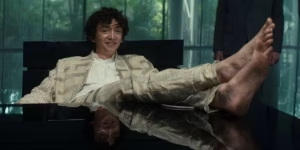
In the beginning, I was optimistic. The first episode of Alien: Earth introduced a variety of interesting ideas, very few of them related to the previous installments in the Alien universe. This, like I said, was promising—it promised a new take on the Alien formula (which by now had been run into the ground for almost 50 years) and it promised more unique ideas in future episodes.
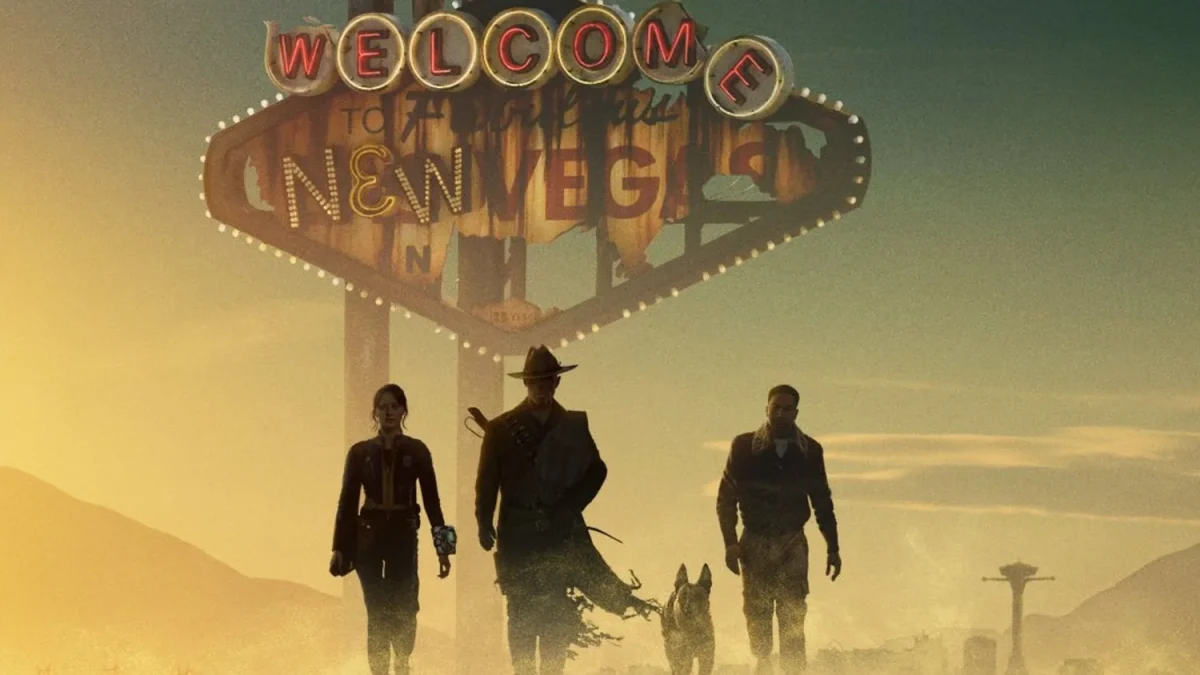
The show is, unsurprisingly, set on Earth in the far future. The world is governed by a handful of massive corporations, only two of which are relevant: bitter rivals Prodigy and Wayland Utani. Prodigy is owned and run by an arrogant, narcissistic young man who calls himself Boy Kavalier, and the rest of the cast is just as quirky and unique.

The interesting characters and their interactions was what first intrigued me. Let me introduce to you the main character of the story: Wendy. Wendy was a child who had a fatal illness, yet her consciousness was transported into a synthetic body before she died, serving as a trial for the new technology Prodigy was developing. Several other children like her follow suit, creating super human-robot “hybrids”. These children are all played by adult actors, which allows for significant amounts of freedom in both acting and writing (which could have potentially been bogged down by child actors.) The cast do an amazing job playing the roles of these characters, emphasizing their childlike tendencies and emotion.
The first episode, “Neverland,” also introduces a recurring motif of contrast. Immature conversation between several close friends breaks up philosophical debates about whether or not these powerful “hybrids” are human, or if Prodigy, the company who developed the hybrid technology, should be allowed to sell practical immortality. The show also emphasizes contrast by overlaying multiple shots or static images on each other. For example, one emotional moment between characters was placed alongside a scene from the humorous “Ice Age” movie. Again, this was just an example of some choices that the show made which significantly contributed to its unique identity.
Unfortunately, Alien: Earth was unable to keep this momentum going after the first episode, as they introduced many stale clichés and convoluted plot logic. Surprisingly, they dove headfirst into the action early in the second episode, completely abandoning the deep, involved character setup that was left unfinished at the conclusion of the first episode.
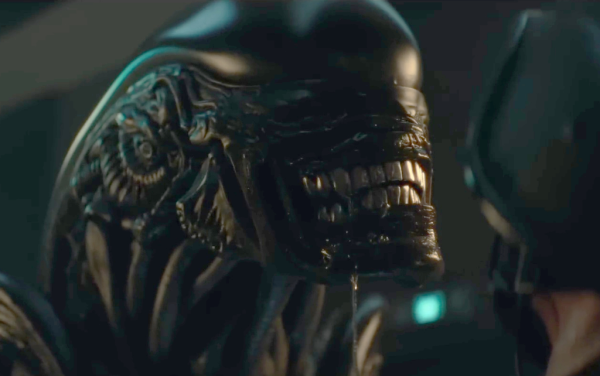
Most of “Mr. October,” the second episode, had to deal with a space ship (carrying sensitive alien species for research that belonged to Wayland Utani) that crashed in a Prodigy-owned city, where the hybrids agree to help out the search and rescue efforts. During the following scenes, we are immediately introduced to the alien antagonists. Among them are the classic xenomorph, a rather uninspired eyeball creature, and a bloodsucking worm—all of which are hardly new and interesting monster designs.
Most of the “thrilling” sequences are also very basic. The xenomorph, intended in the original movies to be an unstoppable beast, tears a few heavily armed guards to shreds before being stopped in its tracks with a taser. After an attempt at an energetic sequence, the eyeball creature is captured by the hybrids using a bucket. The bloodsucking worm creeps up to two guards and, you guessed it, sucks out their blood. Remember, this is only a few minutes into the second episode, and the creators are already shoveling dull suspense and action scenes into our faces.

However, there was one exception. While it may not have been welcome this early in the show, I do appreciate good suspense scenes when they happen, and I would like to highlight this one. Hermit, a search and rescue medic (and Wendy’s brother), scrambles around an apartment building after being chased by the xenomorph. Unknowingly, he leads it to what appears to be a 15th century roleplaying party, where the xenomorph slaughters dozens of people off screen. The following shots of Hermit stumbling through the apartment littered with bodies are very masterfully done, leaning hard into a psychedelic feel. The music, camerawork, and acting all create a very trippy and riveting sequence. This is one of the only scenes in the movie where the monster feels truly terrifying, and it almost feels out of place.
The third episode, “Metamorphosis,” makes another jarring change of pace. With the creatures all being captured and brought to a research laboratory, the show returns to slow, methodical storytelling. Despite being early in the series, it (yet again) fails to introduce any new and interesting ideas. The only notable development (aside from further detailing the characters and setting) is the discovery of Wendy’s new skill: the ability to communicate with the xenomorph.
Yet again, Alien: Earth introduces an overused cliché in the place of an interesting development. I encourage you to think about how many times across various media a character has been able to communicate with thought-to-be “vicious creatures,” only to find out that they were just misunderstood.
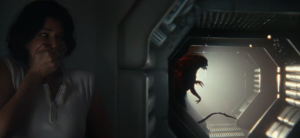
Despite all of the times the show never fulfilled its promises, I ended up finishing it. Alien: Earth definitely had some interesting moments throughout its run time. If you plan on watching it, look forward to watching episode 5, “In Space, No one…,” as it is (in my opinion) a great throwback to the original movies, with a gritty setting, a somewhat engaging whodunit, and decent action. However, don’t get your hopes up for the ending. This show will leave you unsatisfied, confused, and not necessarily wanting more.
While Alien: Earth does undoubtedly have its downsides (alongside every other piece of media), it is worthwhile to see, especially if you’re interested in science fiction. Just don’t raise your expectations.